
Why Budgeting by Month Fails Most People
Most budgeting advice assumes one thing: that your money fits neatly into a monthly calendar.
But for most people, that is not reality.
The problem with monthly budgets
Monthly budgets look clean on paper:
- Income: $4,000
- Expenses: $3,500
- Leftover: $500
But this ignores one critical detail: when your money actually hits your account.
Real life does not follow the calendar
Let’s say rent is due on the 1st, but you get paid on the 5th and the 20th. Your budget might say you are fine, but your bank account says otherwise.
This is where people run into overdrafts, late payments, and constant stress.
The hidden gap
Monthly budgeting creates a timing gap. You can have enough money overall, but not enough at the right time. That is the flaw.
A better approach: budget by paycheck
Instead of asking, “Am I good this month?” ask, “Am I good until my next paycheck?”
This shift changes everything.
What actually works
When you budget by paycheck, you:
- Align bills with income timing
- See upcoming shortfalls early
- Avoid surprise overdrafts
- Make smarter day-to-day decisions
Where StashFlo fits in
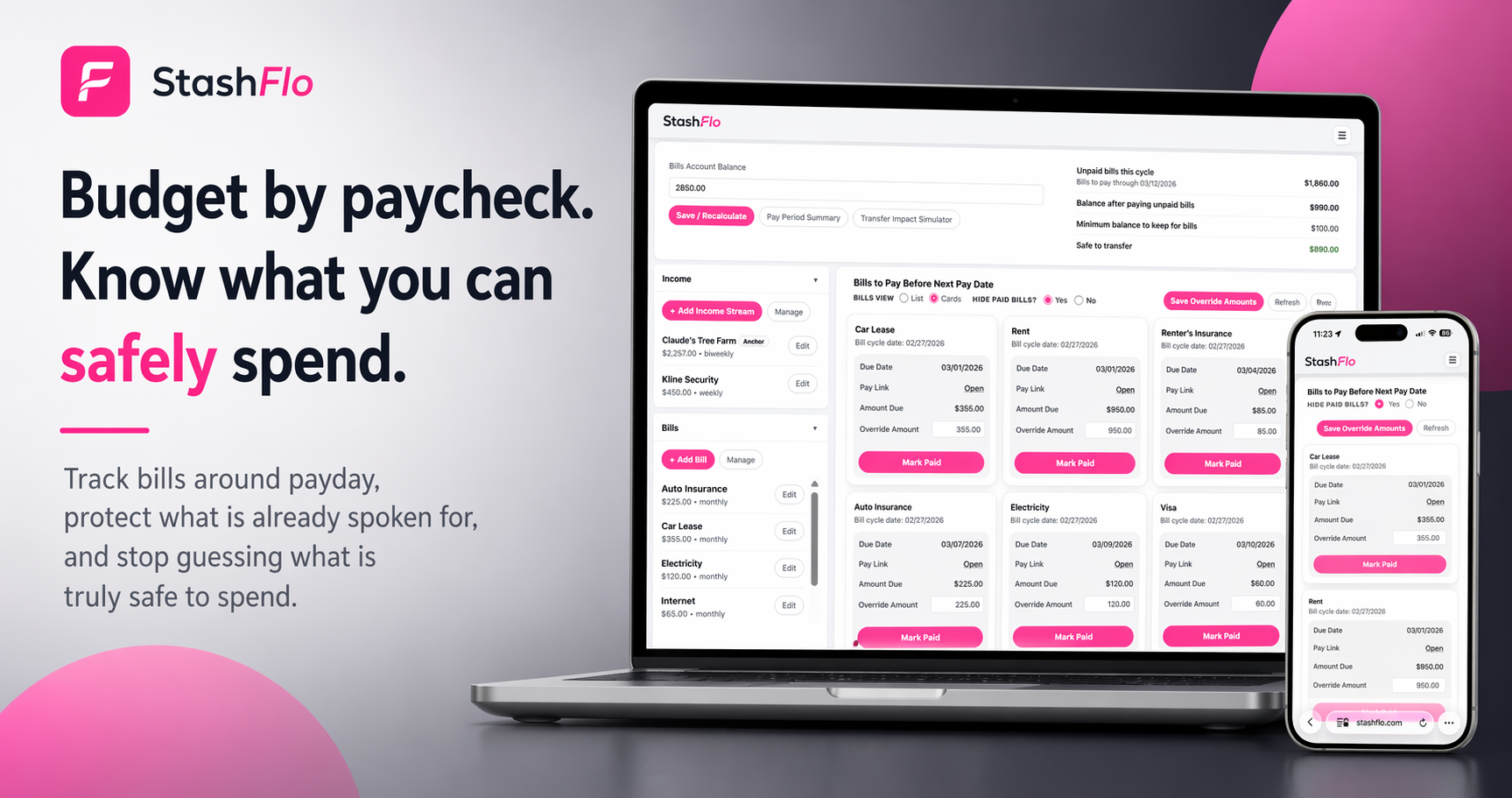
StashFlo is built around this exact idea. Instead of focusing on monthly totals, it helps you answer one practical question: What’s safe to spend right now?
It factors in upcoming bills, required reserves, and your next paycheck so you are not guessing.
If your main goal is to prevent your balance from going negative between paychecks, read How to Avoid Overdrafts Using Paycheck-Based Budgeting.
Want to see what’s actually safe to spend?
StashFlo helps you plan your money around your paychecks so you can avoid overdrafts and stay in control.
Finally know which bills are paid and what’s coming next
Track bills around your paydays, store payment notes and confirmation numbers, and stop guessing.
Start FreeGet simple paycheck-based budgeting tips
Occasional emails. No spam. Unsubscribe any time.